
"exported to Europe"
3000 article(s) found

Introduction to the characteristics and varieties of coffee flavor description and grinding treatment in Mercedes Manor in El Salvador
El Salvador's coffee accounts for 40% of the country's exports, and it is usually picked in November, December and January-March of the following year. The export of raw beans lasts almost all year round. Coffee is produced in seven of the country's 14 provinces, with the largest number in the northwestern provinces of chalatenango and santa ana. The coffee produced in El Salvador is 100% Arabica, of which 68% is

Coffee and the Pope?
From the 15th century coffee was grown extensively in Arabia, and the whole Muslim world enjoyed this so-called "gift of God." More and more Europeans exploring Arabia in the Middle East are curious and documenting the coffee story. Slowly Venetian merchants began to think about coffee re-export business.

What kind of coffee is Indian monsoon Maraba? introduction to the natural drying method of special sun in India
Professional coffee knowledge exchange more coffee bean information please follow the coffee workshop (Wechat official account cafe_style) Indian coffee was brought into the establishment of the first coffee farm by pilgrims as early as the 16th century. You may not imagine that India produces much more coffee than Ethiopia and any Central American country, with 900000 hectares of land growing coffee beans and about 140000 in India.

India's coffee exports will fall by 15% this year
Sina financial news on the afternoon of January 2 Hong Kong time, according to foreign reports, due to demand affected by the European debt crisis, coupled with reduced inventories, coffee exports of India, the third largest coffee bean grower in Asia, will drop by 15% this year. Ramesh Rajah, president of the Indian Coffee exporters Association, said in an interview that coffee shipments this year will be lower than the record 34. 5% in 2011, Bloomberg reported.

What kind of coffee do you have in India? How to drink Indian Malaba coffee by hand?
Professional coffee knowledge exchange more coffee bean information Please follow the coffee workshop (Wechat official account cafe_style) in the early years, Indian coffee was transported by sea from the coast of Malaba to Europe, which often took about six months to arrive in Europe. In the long process of shipping, under the influence of sea breeze and monsoon, these coffee beans gradually develop their flavor and color.

Introduction to the development history of mocha coffee beans
Mocha gets its name from the famous port of Mocha. Transportation in East Africa was very underdeveloped in the 15th century, but it produced the world's most precious coffee beans, which were gathered in the Yemeni port of Mocha and shipped to Europe. Today, the port of Mocha has retreated inland due to the accumulation of silt, while emerging ports, including Mombasa and Durban, have replaced the port of Mocha.

Introduction of Indian style-stained Malaba Coffee producing area _ Indian Coffee brewing data _ how about Indian Coffee
Professional coffee knowledge exchange more coffee bean information please follow the coffee workshop (Wechat official account cafe_style) Coffee production areas in India coffee was brought into the establishment of the first coffee farm by pilgrims as early as the 16th century, you may not imagine that India produces much more coffee than Ethiopia and any Central American country, with 900000 hectares of land growing coffee beans

Introduction to the Origin Culture of Indonesian Coffee beans Malaba Coffee in India
Strictly speaking, monsoon coffee can not be attributed to coffee varieties, but a unique processing method of raw coffee beans, is a new flavor created inadvertently. In the 17th and 18th centuries, India shipped coffee beans to Europe by sailboat, which took six months. The raw beans were placed on the bottom of the barn and absorbed the moisture and salty taste from the sea. The raw beans had already gone bad when they arrived in Europe, and the color changed from dark green.

Mocha coffee-the development of historical boutique coffee beans
Mocha gets its name from the famous port of Mocha. Transportation in East Africa was very underdeveloped in the 15th century, but it produced the world's most precious coffee beans, which were gathered in the Yemeni port of Mocha and shipped to Europe. Today, the port of Mocha has retreated inland due to the accumulation of silt, while emerging ports, including Mombasa and Durban, have replaced the port of Mocha.

Why are Yemeni coffee beans called mocha coffee? what does Yemeni mocha have to do with mocha?
Professional coffee knowledge exchange more coffee bean information Please pay attention to the coffee workshop (Wechat official account cafe_style) Yemeni mocha taste characteristics are more prominent, sour taste is obvious, it is easy to taste cocoa, the cocoa concentration emitted increases with the coffee concentration. Naturally, when making coffee, people will add hot cocoa to it.

A farm where coffee is grown in Colombia.
Colombian coffee farmers can sell all their products to the Coffee Management Association at an official low price, or to exporters, who may offer a higher price or no bid at all. In fact, the Coffee Management Association (FNC) controls exports to Europe, while coffee to the United States is mainly exported through private exporters. However, all exports are subject to restrictions

From an exit port to a smoothie! The place of origin of coffee you are not familiar with-Yemeni mocha
Professional coffee knowledge exchange more coffee bean information follow the coffee workshop (Wechat official account cafe_style) once upon a time, most of the coffee drunk in Europe was made in Yemen, but now Yemen accounts for less than 1% of the world's coffee exports. Although the number of coffee produced in other coffee-producing countries has greatly increased, the influence of Yemen on our coffee culture and coffee varieties today cannot be small.

Coffee and the Pope
From the 15th century coffee was grown in great quantities in Arabia, and the whole Muslim world enjoyed this so-called gift of God. More and more Europeans exploring Arabia in the Middle East are curious and documenting the coffee story. Slowly Venetian merchants began to think about coffee re-export business. However, the Arabs were wary at first. After all, this was their divine fruit.
Boutique coffee-monsoon Malaba (Monsooned Malabar)
Monsoon Malaba, also known as wind-stained Malaba, is a characteristic coffee in India, with yellow and white color, fat bean shape, very low acidity, very thick viscosity, syrup-like taste, nutty and cereal flavors with a hint of spicy and chocolate aromas and unique dusty flavors. In the 17th and 18th centuries, India shipped coffee beans to Europe by sailboat, which took six months and raw beans.

Coffee planting History-introduction to planting conditions and methods
Although Arabs ban the export of coffee seeds, they are indeed very open inside. The first coffee houses known as Kavin Kahn opened in Mecca, and for the first time in human history, anyone who spent a cup of coffee could go in and sit in a comfortable environment to do business and date. Coffee enters Asia. Arabs fail to make coffee.
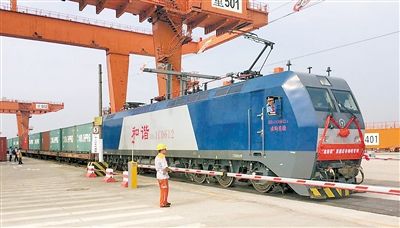
China Coffee Information Yunnan Coffee via Chongqing New Europe Special Train to Europe
Chongqing Morning Post reporter Cao Jiazhi yesterday at 10:00, the Yuxin European coffee train full of coffee beans, roasted fried beans, and instant powder from the back valley of Yunnan set out from the railway central station of Tuanjie Village. 14 days later, this batch of coffee will appear in Duisburg, Germany. This also marks that Chongqing will become an important transit station for global coffee beans. In the next three years, there will be 1 million tons of coffee from Yunnan and Southeast Asia.

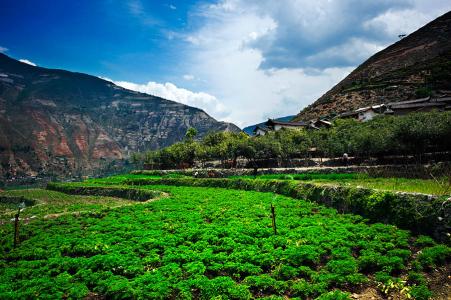
The export of coffee from Yunnan earned about 245 million US dollars in the first half of the year.
In the first half of this year, Yunnan exported 59500 tons of coffee, earning about 245 million US dollars in foreign exchange. Compared with the same period in 2015, the batch, weight and foreign exchange earned increased by 43.4%, 65.5% and 92.3% respectively, all reaching record highs. Among them, 4388.3 tons of coffee were exported through the China-Europe train, with a value of US $17.472 million. Yunnan is one of the major coffee producing areas in Asia, accounting for 9% of the country's acreage and output.
The export of coffee from Yunnan earned about 245 million US dollars in the first half of the year.
In the first half of this year, Yunnan exported 59500 tons of coffee, earning about 245 million US dollars in foreign exchange. Compared with the same period in 2015, the batch, weight and foreign exchange earned increased by 43.4%, 65.5% and 92.3% respectively, all reaching record highs. Among them, 4388.3 tons of coffee were exported through the China-Europe train, with a value of US $17.472 million. Yunnan is one of the major coffee producing areas in Asia, accounting for 9% of the country's acreage and output.
Boutique coffee beans Coffee species Monsoon Malaba (Monsooned Malabar)
Monsoon Malaba, also known as wind-stained Malaba, is a characteristic coffee in India, with yellow and white color, fat bean shape, very low acidity, very thick viscosity, syrup-like taste, nutty and cereal flavors with a hint of spicy and chocolate aromas and unique dusty flavors. In the 17th and 18th centuries, India shipped coffee beans to Europe by sailboat, which took six months and raw beans.

History of coffee origin and spread
The Arabs failed to spread coffee in Asia, but the Dutch did! During their colonization, they planted coffee in Malabar, India, and brought coffee to Batavia, Java, Indonesia, in 1699. The Dutch colonies were once the main suppliers of coffee to Europe. Indonesia is currently the fourth largest coffee exporter in the world.